Kristen Adams
Assistant Teaching Professor
Kristen has enjoyed teaching a variety of courses focusing on Early Modern European art history within the department’s established curriculum. She will soon start teaching a new course devoted to the history of textiles around the world and looks forward to creating additional courses that will add to the General Education offerings in the department. She has also enjoyed getting to know the History of Art majors and minors this past year as a faculty advisor and seeing the work that students are producing as they progress through our program.
Sampada Aranke
Associate Professor
This year, Sampada participated in a book launch panel for her contribution to October Files: David Hammons at Cooper Union with art historians Kellie Jones, Abbe Schriber, Tobias Wofford, and acclaimed photographer Colleen Simpson. A citation of Sampada’s essay, “Questions Posed Externally: Rashid Johnson’s Aesthetic Invitations,” Rashid Johnson (Phaidon Press, 2023) was featured as wall text for his 2025 Guggenheim Museum exhibition Rashid Johnson: A Poem for Deep Thinkers. This year also marked three notable publications that feature her essays: Las Vegas Ikebana: Maren Hassinger and Senga Nengudi (Douglas F. Cooley Memorial Art Gallery, 2025), Jack Whitten: The Messenger (Museum of Modern Art, 2025) and Sixties Surreal (The Whitney Museum of Art, 2025).
Ujaan Ghosh
Assistant Professor
This year, I taught my first General Education course, Buddha to Bollywood, which I had designed during my tenure at OSU. In the fall, I designed a new course titled, Ghosts, Ghouls, and Demons: The Supernatural in Visual Culture for the senior seminar for History of Art undergraduates, which culminated in a field trip to New York City over fall break.
On the research front, 2025 has been particularly productive. Earlier this year, I presented material from my first book at the annual conferences of both the Association for Asian Studies and the College Art Association. Over the summer, I traveled to India to complete research for that book and also began work on a new project examining architectural preservation and legal jurisprudence in late colonial India. An article stemming from this new research is currently under review. While in India, I was invited by Art Alinda, one of Kolkata’s leading art collectives, to give a talk on my work. In terms of publications, I have recently published an article on the religious history of early modern Odisha in the International Journal of Hindu Studies. Additionally, my decade-long co-translation project of Upendra Bhanja’s Baidehīśa Bilāsa—an Odia retelling of the Rāmāyaṇa—was published in India this year. For service, I was elected as one of the new committee members of the Hinduism Studies Unit of the American Academy of Religion. My three-year term began in the spring and will run through 2028.
Benjamin Jones
Assistant Professor
Dr. Jones remains active as a painter and carpenter. He recently published “No Man Can Serve Two Masters: A Critique of Mastery in Charles White’s Sound of Silence,” with Art Journal, in May 2025. According to metrics form Taylor & Francis, Jones’s is the most viewed Art Journal article in the past year. Thanks to funding from OSU’s library, “No Man Can Serve Two Masters” is available open access. In addition to a forthcoming essay for the Routledge Companion to African American Art Practice, Jones is currently at work on his book project, What We Cain't Do: The Pedagogy of the Black Radical Aesthetic Tradition, which has been solicited by Duke University Press.
Aaron Katzeman
Assistant Professor
Aaron is thrilled to join the department this year, having most recently been a 2024-25 Postdoctoral Fellow at the Getty Research Institute. He drove from Los Angeles to Columbus over the summer, making visits to the Denver Art Museum, SITE Santa Fe, and Cahokia, among other stops. Aaron's research focuses on contemporary art and visual culture concerning the interdependent legacies of U.S. settler colonialism and imperialism, specializing in the intersection of nationalism, class, and environmental politics. He recently published a review of Jeffrey Gibson's the space in which to place me, which premiered at the 60th Venice Biennale, in Momus. In October, he was invited to give the 24th Janet E. Hutchison Lecture at the Art Museum at the University of Toronto in coordination with the exhibition Earthwork. His talk, "Land/Labour: Artists Working for and against Settler Colonialism," is derived from his forthcoming book project. He is presenting other portions of his book project this year at the annual conferences for SECAC, American Studies Association, and College Art Association. During the 2025-26 academic year, Aaron is teaching the undergraduate courses HISTART 4030: Museum Studies Seminar - Decolonizing Museums and HISTART 4040: Topics in Indigenous Art - Art and Hawaiian Sovereignty, as well as the graduate seminar HISTART 7015 Exhibition Histories. He is in the process of developing new courses on contemporary Native American art, anticolonial/Indigenous cinema, and a general education course on land and art incorporating the nearby Newark Earthworks.
Namiko Kunimoto
Associate Professor
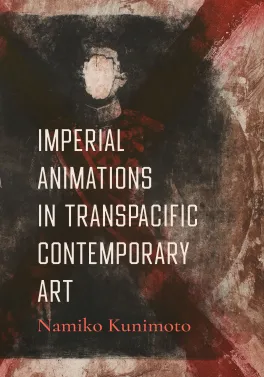
Namiko is thrilled to share that her new book, Imperial Animations in Transpacific Contemporary Art, will be published in February 2026 by the University of California Press. The book explores how contemporary artists across the transpacific region confront colonial history and show how its legacies continue to shape politics in Japan and beyond. Imperial Animations received the University of California Press FirstGen Scholar Award.
Over the past year, Kunimoto has spoken at Northwestern University on “Give me a Light: Art History and Militarism in Japan,” at the Institute of Contemporary Art in Miami on the work of Tanaami Keiichi, and at the Columbus Museum of Art for their exhibition on Toshiko Takaezu and JB Blunk. She also presented “Urgent Animations in the Contemporary Art of Japan and Taiwan” at the Association for Asian Studies Conference.
She was grateful to serve as a Global Arts and Humanities Fellow in 2024–2025, and continues to enjoy her role as Director of the Center for Ethnic Studies.
Erica Levin
Associate Professor
Erica recently published an article in Afterimage entitled, "To assemble is to think through this world: Narrative Desire in the Films of Ana Vaz." In May, she continued her research on Vaz's work by visiting the artist's exhibition "Meteoro" at the Secession in Vienna. She also presented "A New Rural Cinema: Curating Experimental Communal Forms" at the Politics of Curatorship conference, held at the School of the Arts, Católica University in Porto, Portugal. In June, she traveled to London to research the role of artists and filmmakers in protests against the demolition of homes and green spaces to build the M11 Link Road in East London in the early 1990s. She presented her findings in the paper, "Protest, Play, and a Cinema of the Commons" at the Screen Studies conference in Glasgow. In August, she presented the paper, "Desire Still Lingers in the Landscape: Sílvia das Fadas’s Rural Cinema" at the Visible Evidence conference in Philadelphia. This fall she’ll present on the work of artist Onyeka Igwe at Goldsmiths, University of London in November. In March, she will give an invited lecture on the work of artist Tiffany Sia at the Sorbonne. She is currently working on an essay on Sia’s work that will be published in a forthcoming collection entitled, Between Self and State in Global Women’s Video Art: Fractured Mirrors. In Fall 2025 she taught teaching a grad seminar entitled "Property Values," which draws upon her current research project. The course takes up the question of how art and cinema are bound up with visual regimes of property. It explores the philosophical and legal genealogies of property as frameworks for administering space, defining social hierarchies, and extracting value.
Christina Wei-Szu Burke Mathison
Associate Professor of Teaching
In February, Christina Burke Mathison brought together artists and art historians from Taiwan and the U.S. in the conference she organized, Layers of History: The Art of Taiwan and Its Multiplicities. This past academic year, Christina hosted a visiting scholar from Taiwan, Professor Su-hsing Lin, from the Tainan National University of the Arts. Christina also served on the Local Arrangements Committee for the Association for Asian Studies conference that was held in Columbus in March. She organized and presented on the panel “Picturing East Asia – Celebrating Our Teacher, Julia F. Andrews” at AAS as well as contributing to the conference by organizing The Silk Road exhibition and hosting excursions to the Columbus Museum of Art and OSU. One of the excursions she led brought conference attendees to view the exhibition Mobility, Collecting, and Diaspora: Preserving and Teaching East Asian History, which she curated with her students in her Art of Modern and Contemporary China course. The excursion also included a viewing of a seventh century calligraphic scroll from Dunhuang, China, part of the Wiant Collection of Chinese Art that is housed in the Wexner Center for the Arts. In October, Christina co-presented “Hidden Treasures and Unsolved Mysteries: Overlooked Works in the Bliss M. and Mildred A. Wiant Collection of Chinese Art” with one of her students, Jason Wang, at the Midwest Conference on Asian Affairs.
Jody Patterson
Associate Professor
Jody continues to design and deliver courses and seminars dedicated to the study of American Art, and she serves as Director of Graduate Studies, a role which she finds both energizing and inspiring. This past spring she launched a new undergraduate General Education course “Inventing the Americans” which explores how the visual arts contributed to notions of nation and citizenship during the 19th century. A particular highlight for her this year was winning the Ronald and Deborah Ratner Distinguished Teaching Award. The Award generously funds teaching initiatives to augment student experience and Jody is now designing a field work course on WPA murals in Ohio. Her continuing work on New Deal culture is furthered through her role on the National Advisory Board of the Living New Deal, a research project and online public archive documenting the scope and impact of the New Deal on American lives. In February she co-chaired a panel “The ‘Work’ of Art in American Culture from the New Deal to Now” at the annual meeting of the College Art Association; the papers will be expanded and published in a special issue of Source: Notes in the History of Art, which she will co-edit. In alignment with her new research on art and politics in the South during the 1930s and 1940s, she is co-chairing a panel “Race, Labor, and New Deal Arts Programs in the South” this autumn at the South Eastern College Art Conference. Her book chapter “Meyer Schapiro and the Value of Modern Art” appeared in The Routledge Companion to Marxisms in Art; she was commissioned to write a catalogue essay on printmaking and politics in the 1930s for an upcoming exhibition at the Philadelphia Museum of Art, and she is continuing to make good progress on her next book project What About Modern Art in Democracy? American Art and the Legacies of the New Deal in the 1940s.
Kris Paulsen
Associate Professor
In 2025-2026, Kris Paulsen is the Global Arts + Humanities Faculty Leadership fellow. In this role she oversees the faculty fellow cohort and public programming on the theme “Creativity, Intelligence, Automation.” As part of her 2024-2025 role as Visiting Scholar at the Centre for Technology and Culture at the University of Toronto, Prof. Paulsen delivered a keynote address on “Hallucinatory AI.” She also delivered the keynote address at the ARTCHEA: Archaeologies of Telepresence Conference at Università delgi Studi di Milano. There she presented a paper titled, “The Impossible Now: Limit Telepresence and Robotic Entanglement on Mars,” which is part of a new research project on art/science collaborations centering on NASA’s Mars data. She presented other work from this body of work at the 2025 meetings of the Society for Literature, Science and the Arts (SLSA) and the Association for Arts of the Present (ASAP), as well as the Berkeley Center for New Media 25th Anniversary Alumni Conference. Additionally, she published an article on this research, “Martian Time Slips,” in LA+ Interdisciplinary Journal of Landscape Architecture and a conversation with artist, designer, and computational linguist Angie Waller, “Is AI Sorry It Took Your Job?,” for the Walker Art Center.
Paulsen also organized the exhibition “Mimi Ọnụọha: What Is Missing Is Still There,” which took place in various sites across Columbus in Autumn 2025, including The Columbus Museum of Art, The Wexner Center for the Arts, outdoor billboards and monitors around campus, and Orange Barrel Media screens throughout the city’s commercial districts. The project is a collaboration with former Wexner curator, Kelly Kivland, and will travel to Detroit in 2026. An exhibition catalogue will follow. Prof. Paulsen continues to run the Art, Technology, and Social Change Micro-Residency Program and to teach classes on new media, contemporary art, and curatorial practice to graduate and undergraduate students.
Carlos Rivas
Assistant Professor
In May of 2025, Carlos travelled to Williams College to participate on a panel on critical geographies, where he presented work on eighteenth-century Spanish colonial cartography featured in his upcoming book monograph, Warped Isthmus, which he is also preparing to submit for review. Warped Isthmus will review late Post-Classic and early modern representations of the Central American isthmus, or land bridge, that connects North and South America, and its epilogue makes a provocative comparison of ancient Mesoamerican and Medieval European cartographic modes of visualizing space-time.
This year Carlos travelled to both the College Art Association conference in Chicago and the Latin American Studies Association conference in San Francisco. At CAA, he chaired a panel on “The State of Central American Art History” which was among the first panels ever at CAA dedicated exclusively to thinking through and theorizing a Central American Art History, from ancient to contemporary. Out of these conversations has emerged an essay that will be published in the peer-reviewed anthology Extinctions | Imaginations | Futures edited by Guisela Latorre and Dionne Custer Edwards, along with an essay under early review for a Latin American and Latinx Visual Culture issue that will feature a diálogo on Central American art. At LASA, he presented on a panel called “Building Anti-Imperialist Solidarities: Engaging Salvadoran Resistance through Collaborative Research and Practice” which gathered both academics and social workers.
His anthology, co-edited with decolonial liberation feminist psychologist Joanna Beltrán Girón, titled X∞ Creatives: The Healing Power of Isthmian Ancestral Technologies, is currently under review. This anthology uses the frameworks of speculative and science fiction, Black and Indigenous quantum theories, technology, and sacred plants to convene Central American scholars and poets who have relationships with psychedelic medicine, which makes it a groundbreaking contribution to the field of Latinx Studies. Carlos has contributed two essays, including a film analysis of the 2019 Guatemalan speculative horror film La llorona (where the legendary villainess takes the role of divine judge in her supernatural pursuit of a former president of Guatemala) and a manifesto titled the “Anti-Algorithm.”
In Spring 2026, Carlos will teach a new online asynchronous Ethnic Studies course called “Central American Immigrants in the United States” along with the undergraduate survey of Modern Latin American Art here in the History of Art Department.
Andrew Shelton
Professor
Andy is serving as the Interim Chair of the Department of Dance for the 2025-26 academic year. He delivered a talk entitled “The Queer Setting of Frédéric Bazille’s Improvised Field Hospital (1865)” at the annual conference of the College Art Association in February 2026. He is also serving as the guest editor of the second volume of a special issue of the open-access, online journal Arts on the theme of “Queerness in the Art and Visual Culture of 18th- and 19th-century Europe.”
Karl Whittington
Professor of European Medieval Art and Department Chair
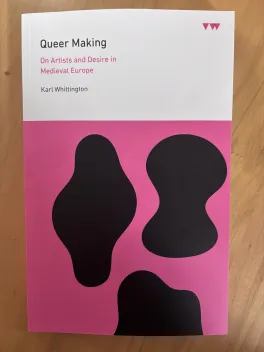
Karl Whittington published a new book, Queer Making: On Artists and Desire in Medieval Europe in December 2025 as part of the ICMA’s
“Viewpoints” series, published by Penn State University Press. He gave an invited lecture on this book project at the Clark Art Institute in April 2025, as well as an invited lecture at the INHA in Paris in December 2025. This year he also published an essay, “Touching Saint Sebastian” in Spectrum of Desire: Love, Sex, and Gender in the Middle Ages, the catalogue for a show that opened at the Met Cloisters in October 2025.
He continues his work as one of the lead authors of the 17th edition of Gardner’s Art through the Ages, expected to be published in Fall 2027. To support his research for the textbook, he made trips in 2025 to Rome, Pompeii, Naples, Paris, and Istanbul.
Karl welcomed two new graduate advisees in Fall 2025, Adrian Butler and Casey Carsel, and is proud of all the outstanding work being done by his current students.