Spring 2027 Course Offerings
For the most accurate listings, including modes of instruction please visit BuckeyeLink or Classes.osu.edu.
Spring 2027 Course Offerings
2000-Level Courses
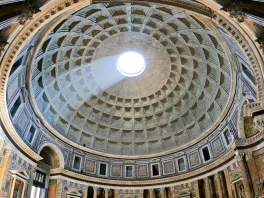
History of Art 2001 - Western Art I: Ancient and Medieval Worlds
Instructor Sarah Schellinger
Class # 35582 | IN-PERSON | Full Semester | LECTURE Mon & Wed 9:10-10:05 + FRI RECITATION
This course examines the history of Mediterranean (broadly defined) and European arts and architecture from the Prehistoric period through the fifteenth century CE. The course will concentrate its attention on a select group of representative monuments and objects, placing them within the historical and cultural contexts in which they were produced. We will analyze these monuments and objects using in-depth visual analysis and primary textual sources to fully understand the breadth and depth of their importance, while developing analytical and interpretive skills. The goal of this course is to impart not only a body of knowledge but also a set of critical tools that can be applied to a wide range of visual materials found in other courses and disciplines.
GEN Foundations: Literary, Visual and Performing arts (LVPA) and Historical and Cultural Studies
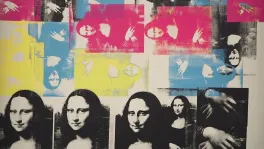
History of Art 2002 - Western Art II: Europe and the United States, Renaissance to Present
Professor Jody Patterson
Class #35585 | HYBRID | Full Semester | ONLINE ASYNCHRONOUS LECTURE + IN-PERSON RECITATION FRI
This course examines the art of Europe and the United States from about 1400 to the present, with an emphasis on developments in painting. Rather than a traditional survey of that period, the course will concentrate on a select group of representative works that shaped Western social, political, economic, and intellectual history. There will be strong emphasis, too, on questions of analysis and interpretation including, in some cases, the changing history of the artworks’ reception. The goal will be to impart not only a body of knowledge but also a set of critical tools, including visual literacy, that students will be able to apply to a wide range of material not specifically covered in the course.
GEN Foundations: Literary, Visual and Performing Arts (LVPA) and Historical and Cultural studies
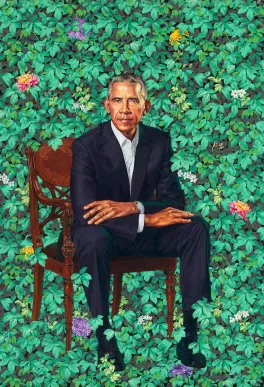
History of Art 2009 – Introduction to African American Art
Professor Benjamin Jones
Class # 35589 | IN PERSON | MON AND WED 9:35-10:55
This undergraduate lecture course traces a history from the emergence of racial blackness to formations Black futurity and from the plantation to artificial intelligence, in order to better understand how Black artistic production has been a site of aesthetic innovation and political resistance. Our interdisciplinary survey will primarily focus on the artistic production of African American artists, but we’ll also examine art of the broader African Diaspora.
GEN Foundations: Literary, Visual, and Performing Arts (LVPA) and Race, Ethnicity, and Gender Diversity (REGD)
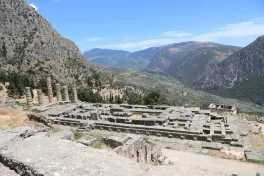
History of Art 2301 ONLINE - Classical Archaeology
Professor Mark Fullerton
Class # 34929 | ONLINE | Full Semester
HA2301 is concerned with the study of the Classical past through its material remains. The term Classical here refers to the Greek and Roman cultures of the Mediterranean world beginning with the palace civilizations of the Aegean Bronze Age and extending through the third century of the Roman Empire (c.2000 BCE-300 CE). The objective of the course is to familiarize the student with the history of the discipline, the techniques of archaeological fieldwork, and the major archaeological discoveries and controversies of the past two centuries.
Additionally, as a History of Art course, HA 2301 places a strong emphasis on the study of the major arts of antiquity, especially architecture, sculpture, and painting. Indeed, the study of ancient Greek and Roman art has for centuries been embedded within the field of Classical Archaeology, for reasons that we will closely consider. The selection of sites and monuments is not comprehensive but is intended to showcase important developments within the field, especially in cases where archaeology has provided evidence that challenges preconceived notions of Greek and Roman culture.
GE Theme: Tradition, Culture, and Transformation
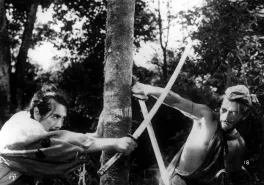
History of Art 2901 ONLINE – Intro to World Cinema
Professor Kris Paulsen
Course # 24834 | ONLINE | ASYNCHRONOUS
This course will introduce students to the history of film as an artistic medium and a global art form. We will track technological, aesthetic, and formal developments in its evolution from photographic and proto-cinematic technologies to digital cinema by studying particular masterpieces, and focusing on the role of the director or auteur. We will pay close attention to the medium’s complex relationship to time, its changing materiality, and its fraught relationship to truth and reality. Students will engage in a historical and formal study of international cinema through a chronological survey of its major forms, techniques, and its relationship to the broader history of art, as well as social and political history. We will sample its major and “minor” forms, from Hollywood productions to art gallery experiments and cinema from the developing world. Students will be introduced to the grammar of film through a historical account of its formal evolution and the stylistic analysis of the visual and narrative structures of individual films.
GEN Foundations: Literary, Visual, and Performing Arts (LVPA)
ONLINE GE Courses, 7 Week Second Session
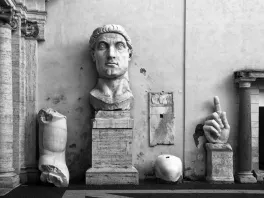
History of Art 2001 - Western Art I: Ancient and Medieval Worlds
Course Designer - Professor Karl Whittington, Instructor – Professor Kristen Adams
Class #35581 | ONLINE | 7 Weeks, Session 2 | ASYCHRONOUS
This course examines the history of Mediterranean (broadly defined) and European arts and architecture from the Prehistoric period through the fifteenth century CE. The course will concentrate its attention on a select group of representative monuments and objects, placing them within the historical and cultural contexts in which they were produced. We will analyze these monuments and objects using in-depth visual analysis and primary textual sources to fully understand the breadth and depth of their importance, while developing analytical and interpretive skills. The goal of this course is to impart not only a body of knowledge but also a set of critical tools that can be applied to a wide range of visual materials found in other courses and disciplines.
GEN Foundations: Literary, Visual and Performing arts (LVPA) and Historical and Cultural Studies
History of Art 2002 - Western Art II: Europe and the United States, Renaissance to Present
Course Designer – Jody Patterson, Instructor – TBD
Class #35743 | ONLINE | 7 Weeks, Session 2 | ASYNCHRONOUS
This course examines the art of Europe and the United States from about 1400 to the present, with an emphasis on developments in painting. Rather than a traditional survey of that period, the course will concentrate on a select group of representative works that shaped Western social, political, economic, and intellectual history. There will be strong emphasis, too, on questions of analysis and interpretation including, in some cases, the changing history of the artworks’ reception. The goal will be to impart not only a body of knowledge but also a set of critical tools, including visual literacy, that students will be able to apply to a wide range of material not specifically covered in the course.
GEN Foundations: Literary, Visual and Performing Arts (LVPA) and Historical and Cultural studies
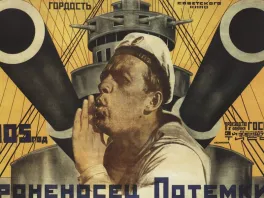
History of Art 2901 ONLINE – Intro to World Cinema
Course Designer – Kris Paulsen, Instructor TBD
Class #28559 | ONLINE | 7 Weeks, Session 2 | ASYNCHRONOUS
This course will introduce students to the history of film as an artistic medium and a global art form. We will track technological, aesthetic, and formal developments in its evolution from photographic and proto-cinematic technologies to digital cinema by studying particular masterpieces, and focusing on the role of the director or auteur. We will pay close attention to the medium’s complex relationship to time, its changing materiality, and its fraught relationship to truth and reality. Students will engage in a historical and formal study of international cinema through a chronological survey of its major forms, techniques, and its relationship to the broader history of art, as well as social and political history. We will sample its major and “minor” forms, from Hollywood productions to art gallery experiments and cinema from the developing world. Students will be introduced to the grammar of film through a historical account of its formal evolution and the stylistic analysis of the visual and narrative structures of individual films.
GEN Foundations: Literary, Visual, and Performing Arts (LVPA)
History of Art 3010 - Gender and Sexuality in European Art
Course Designer - Professor Karl Whittington, Instructor TBD
Class #36100 | ONLINE | 7 Weeks, Session 2 | ASYNCHRONOUS
This course offers an introduction to the intersectional study of European Art, exploring the intertwining ideologies of gender, sexuality, race, and ethnicity from the Ancient Mediterranean World to the present. We will see that the ways artworks impact and construct ideas and stereotypes about gender, race, and sexuality in the modern world are deeply influenced by their development in premodern history. Topics to be explored include the ways in which ideas about gender roles and identities are shaped by artworks; the gendered contexts of artistic production; gendered practices of viewing works of art; the changing status of female and non-white artists and patrons in Europe; the way people of color were depicted in premodern European art; and queer and transgender artists and artworks. We will investigate the ways in which works of art enforced particular codes of behavior for people of different genders and races, but also how works of art served as sites of resistance to such roles and stereotypes, and as a place where individual identities were negotiated and portrayed. We will explore both famous works of European art and also lesser-known paintings, sculptures, buildings, and objects of visual culture.
GEN Foundations: Literary, Visual, and Performing Arts (LVPA) and Race, Ethnicity, and Gender Diversity (REGD)
3000-Level Courses
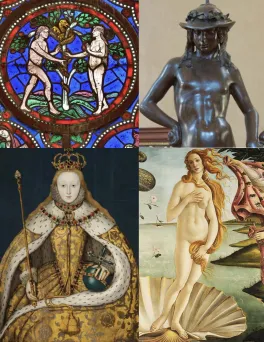
History of Art 3010 - Gender and Sexuality in European Art
Instructor TBD
Class #27399 | IN PERSON | TUE & THUR 5:30-6:50
This course offers an introduction to the intersectional study of European Art, exploring the intertwining ideologies of gender, sexuality, race, and ethnicity from the Ancient Mediterranean World to the present. We will see that the ways artworks impact and construct ideas and stereotypes about gender, race, and sexuality in the modern world are deeply influenced by their development in premodern history. Topics to be explored include the ways in which ideas about gender roles and identities are shaped by artworks; the gendered contexts of artistic production; gendered practices of viewing works of art; the changing status of female and non-white artists and patrons in Europe; the way people of color were depicted in premodern European art; and queer and transgender artists and artworks. We will investigate the ways in which works of art enforced particular codes of behavior for people of different genders and races, but also how works of art served as sites of resistance to such roles and stereotypes, and as a place where individual identities were negotiated and portrayed. We will explore both famous works of European art and also lesser-known paintings, sculptures, buildings, and objects of visual culture.
GEN Foundations: Literary, Visual, and Performing Arts (LVPA) and Race, Ethnicity, and Gender Diversity (REGD)
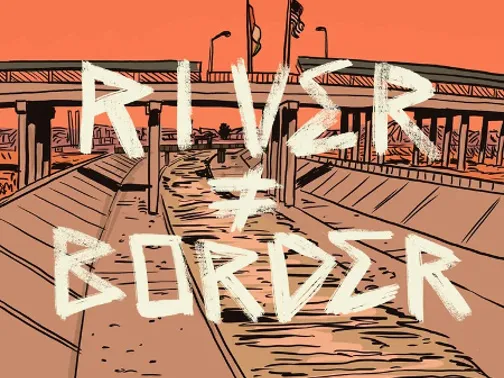
History of Art 3408 - Latinx Migrations Through Comics
Professor Fernanda Diaz-Basteris
Class Number #36096 | IN PERSON | TUE & THURS 2:20-3:40
This General Education course (GE Theme: Migration, Mobility, and Immobility) examines migration, displacement, and detention in Latinx communities through comics, webcomics, zines, graphic memoirs, and graphic novels. Students will learn basic Comics Studies terminology and develop the ability to identify different formats within the comics medium. Comics will be paired with scholarship in Migration Studies, Border Studies, and Disaster Studies.
GE Theme: Migration, Mobility, and Immobility
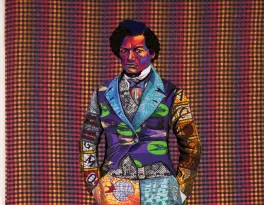
History of Art 3020 – History of Textiles
Professor Kristen Adams
Class # 34924 | IN PERSON | MON & WED 2:20-3:40
To tell the history of textiles is to tell the history of humankind and its cultures and traditions. Textiles through the ages have adorned bodies, decorated churches, propelled trade routes, driven language, and served as tactile forms of protest. By critically examining textiles rooted in cultural traditions from around the world, students will come to understand how textiles dating from pre-history to the present are artifacts deeply woven into the material culture of society. In addition to providing physical protection from the environments in which we live, textiles also serve as symbols of status and power, and their production and use have propelled systems that have had profound implications on humankind and its history. Our study begins with textiles produced from plant fibers - linen and cotton - and then shifts to textiles produced from animal fibers - wool and silk. We will examine technologies utilized across the Bronze Age, the Industrial Revolution, and the digital age to inform our understanding of textiles and their histories.
GE Theme: Tradition, Culture, and Transformation
History of Art 3521 - Renaissance Art
Professor Kristen Adams
Class # 26086 | IN PERSON | MON & WED 3:55 - 5:15
This course offers a panoramic introduction to the greatest artists and masterpieces of the Italian Renaissance from its beginnings in Florence through its triumph in Rome and Venice. After setting the stage with a brief overview of the art of the Late Gothic period in Italy, lectures will trace the nature of the revolutionary changes that transformed painting, sculpture and the decorative arts in the 15th and 16th centuries. Students will consider how art was deployed to project social, political, or spiritual power and authority, and explore how spaces such as chapels, monasteries, private palaces, and the public square shaped the viewing experience for artists and viewers alike. A number of Renaissance environments will be experienced in Virtual Reality in collaboration with the Emerging Tech Studio and students will reflect on how modern technology brings this remarkable period in history to life in new ways.
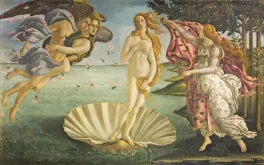
Image:Sandro Botticelli, Birth of Venus, ca. 1485, Tempera on canvas, The Uffizi
GEN Foundations: Literary, Visual, and Performing Arts (LVPA)
History of Art 3562 – Latinx Art
Instructor TBA
Class # 35686 | IN PERSON | MON & WED 5:30-6:50
This course provides an overview of contemporary Latinx Art in the United States from its origins in the 1960s Civil Rights Movement through today. U.S. Latinx Art refers to the artistic, visual, and creative production emerging from Latinx communities in the context of diaspora after immigration from Latin America.
Prereq: Not open to students with credit for EthnStd 3562. Cross listed with EthnStd.
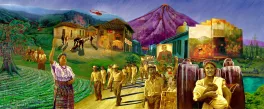
Image: Judy Baca, Migration of the Golden People, Mural, 2002. Central American Resource Center, Los Angeles, California.
GE THEME: Citizenship for a Just & Diverse World and Migration, Mobility, and Immobility
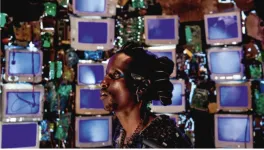
History of Art 3901 - World Cinema Today
Course Designer - Erica Levin, Instructor TBD
Class #28558 | ONLINE | ASYNCHRONOUS
This course provides an introduction to World Cinema. It begins by examining how the aesthetics of realism, concerned above all with the texture and temporality of everyday life, have shaped developments in filmmaking in Europe, Latin American, and Asia. It also considers how recent global art cinema engages with the codes of genre and commercialism. How have familiar cinematic codes and conventions been reinvented to depict experiences shaped by transnationalism, colonialism, global finance, and migration? By placing films made across the globe into the broader historical and (multi-) cultural contexts of their production, this course examines how world cinema today not only engages life in the present but also calls up occluded fragments of the past.
GEN Foundations: Literary, Visual, and Performing Arts (LVPA)
4000-Level Courses
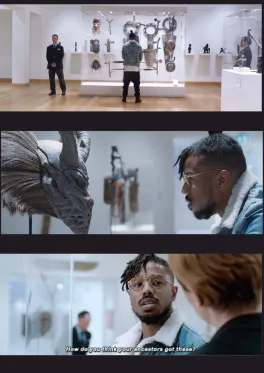
History of Art 4010 - An Introduction to the Methods and Theories of Art History
Professor Ujaan Ghosh
Class # 18314 | IN PERSON | MON & WED 3:55-5:15
This course is intended for Art History Majors and other interested students to get acquainted with the fundamental theories and methods of art historical writing. Throughout the course, we will closely read some of the foundational texts that have influenced art historical writing over the past few centuries. We will look at how global movements— aesthetic, political, and sociological have shaped the ways in which historians have approached writings on art. At the same time, the course will attempt to decenter the overabundant theoretical gaze on European thought that dominates art historical methodology. At the end of this course, students should be able to engage with the multiple modalities of art historical thought and become more aware of the kind of art historian they want to become in the future.
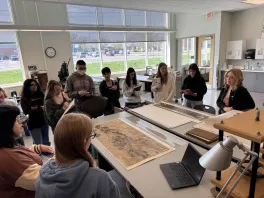
History of Art 4035 - Art and Conservation- History, Ethics, and Materials
Professor Christina Wei-Szu Burke Mathison
Class # 36898 | IN PERSON | TUES & THURS 2:20-3:40
This course is designed as an introduction to art conservation through the lens of art history. In this class, we will work through various topics and areas of conservation through an exploration of historical and theoretical readings on art conservation and in hearing from specialists in the field. Considering the ethics behind art conservation, course topics will include the conservation of: architecture, variable media art, East Asian scrolls, oil on canvas, textiles, works on paper, photography, and books and manuscripts. We will also consider concepts of preventive conservation in the context of the care of archaeological materials, archiving, and digitization. The course will involve class visits to conservation studios, engagement with specialists in the field, working on an art conservation project, and learning about art conservation programs and conservation fieldwork.
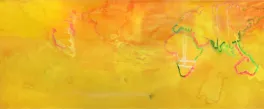
History of Art 4240 - Arts of the Black Atlantic
Professor Sam Aranke
Class # 29175 | IN PERSON | WED & FRI 11:10-12:30
Where is the Black Atlantic? What does it look, smell, taste, and feel like? How does it color our world? This class explores the visual and cultural history of the Black Atlantic—a phrase used to define the relationship between dissonant geographical locations that were forged into relationship with each other through the Transatlantic Slave Trade. We will forge an understanding of how vision, texture, touch, sound, and color owe their meanings through the Middle Passage and its production of arts of the Black Atlantic. Questions of justice and freedom are central to this course, and we will consider how artists envision their work as acts of civic service. We will work with concepts like “modern” visual forms, social-cultural movements, the afterlives of slavery, “the aesthetics of cool”, and the anticolonial imagination. Of particular focus will be how and why migration and mobility come to be contested terms for Black artists, critics, and activists.
GE THEME: Migration, Mobility, and Immobility
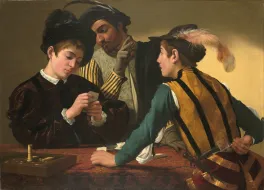
History of Art 4541 – Art of Italy and Spain
Professor Kristen Adams
Class # 35592 | IN PERSON | MON & WED 9:35-10:55
The seventeenth century marks an era of heightened artistic experimentation and experience, a phenomenon loosely labeled “the Baroque” by art historians. Baroque art is emotional, visceral, seductive, and even manipulative. This course will help students learn how to interpret and critique this vast, complex, often contradictory, and even fun period of art from primarily two geographical areas, Italy and Spain (ca. 1580-1700). Students will explore topics such as the demands placed on religious imagery following the Counter-Reformation, the relationship between art theory and art-making, artistic self-fashioning, the rise of new genres of painting and specialized art markets, and the transmission and translation of iconography and ideas across the European continent and beyond. The art and architecture covered in this course will provide unique avenues to approach a period in history marked by political and religious upheaval, scientific discovery, and intellectual developments that shaped the modern world.
Image: Caravaggio, The Cardsharps, c. 1596-97, Oil on canvas, Kimbell Art Museum

History of Art 4605 – Aspects of Modernity
Professor Benjamin Jones
Class # 29768 | IN PERSON | TUE & THUR 3:55-5:15
This undergraduate lecture course introduces one of the most contested terms of art-historical inquiry today: modernism. For some, the terms modernity and modernism simply denote Western art of the last two hundred-odd years. For others, modernism refers to forms of “progress” and “advanced” visual art. For still others, the modernism singles out modes of artistic opposition to the structures of modernity: patriarchy, capitalism, colonialism, industrialization, and war, that continue to define our world. Over the course of the semester, we will keep these competing definitions in play as we examine signal episodes of European and U.S. modernism from the mid-nineteenth through today, as well as their counterparts in Brazil, China, Haiti, India, Japan, Mexico, and Nigeria. At the same time, we will engage major concepts that have spurred and inspired the movements of modern art, including, capitalism, communism, fascism, racism, sexism, orientalism, and psychology, whose proponents come to define the modern era and our approaches to its understanding within humanistic discourse. This course examines a history of ideas, (art) objects, and events that have shaped the “modern.”
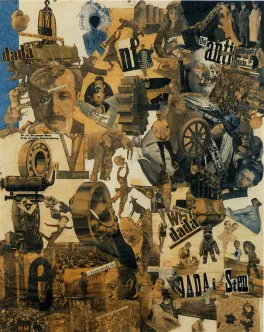
History of Art 4620 - Twentieth-Century European Art
Instructor Asia Adomanis
Class #36451 |ONLINE | TUE & THURS 5:30-6:50
This course explores the relationship between some of the formal changes that appeared across 20th-century European art movements and the shifting social, political, and philosophical frameworks that shaped the century. We will analyze concepts of modernity and modern ways of looking at the world in the European context, as well as the discontinuities introduced by postmodernism, identifying connections and distinctions between the visual languages utilized by different art movements and the theoretical or political underpinnings that motivated them. We will examine how the art world of 20th-century Europe was transformed by new technologies of labor, leisure, and war that reshaped national borders and birthed new ideologies. Throughout the course, students will consider how an artwork’s formal and stylistic qualities—not only its content—can be interpreted to give viewers an understanding of the artist’s outlook on their historical moment. Key topics include Dadaist form and the social and political rupture of World War I; Constructivist design and Marxist theory; tensions between Expressionism and Realism as modes of representation in the interwar period; the politicization of aesthetics during World War II and the Cold War; Pop Art, mass media, and the persona of the modern artist; the European neo-avant-garde, post-modernism, and new perspectives on gender, sexuality, and the ‘canon’ of art history; and decolonial art movements and the unevenly balanced history of transcultural exchange between Europe and Africa, Asia, and the Americas.
Through comparative visual analysis of artworks and discussions of historical texts, artists’ writings, and art criticism, we will consider the ways in which artists broke from tradition in their responses to modernization and industrialization, revolutions and world wars, developing technology, and a rapidly interconnected cultural landscape. Course activities will include lectures and in-class discussions, close reading and critical analysis of texts, and writing assignments and a final presentation focused on building analytical research skills.
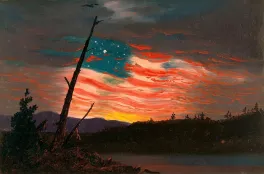
History of Art 4630 – American Art: Inventing the Americans- The Art of Nationhood, Citizenship, and Democracy, 1776-1900
Professor Jody Patterson
Class # 28149 | IN PERSON | TUE & THURS 9:35-10:55
This course is concerned with how citizenship, nationhood, and democracy were constituted in and through works of art from the founding of the United States in the late 18th century, through the nation’s rise to global dominance by the turn of the 20th century. We will look at a range of artworks— including painting, sculpture, print, and photography—with a view to understanding how the nation, its citizens, and its approaches to democracy were made visible (or rendered invisible) in culture.
The course will explore what artworks say about national identity and historical memory. Do images convey a common set of ideals and values that create an overarching sense of unity in American society? Conversely, how and why do different social groups contest certain artworks or visual representations? Unifying themes in this course include the implications of geographical and political redefinition of the United States through Westward expansion; processes of economic and social modernization; shifting definitions of what it meant to be an “American;” who counted as a “citizen;” and how democracy has been pictured for different audiences.
GE THEME: Citizenship For a Just and Diverse World
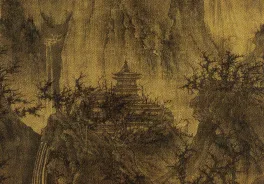
History of Art 4810 - The Arts of China
Professor Christina Wei-Szu Burke Mathison
Class # 36367 | IN PERSON | MON & WED 2:20-3:40
The distinct and influential visual culture of China reflects the dynamic periods in China’s history. This course examines the art and history of China thematically and chronologically exploring the culture’s artistic practice in religious, ritual, political, and courtly contexts. Beginning with early pottery-making and jade-carving cultures and proceeding into the twenty-first century, students will analyze the main artistic trends over time and wrestle with the related issues of power, authenticity, and politics.
GE Foundations: Literary, Visual, and Performing Arts (LVPA)
5000-Level Courses
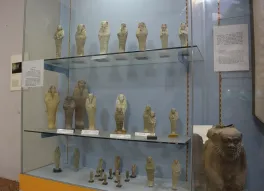
History of Art 5001 - Special Topics in Western Art: Ancient Art and the Museum
Instructor Sarah Schellinger
Class # 35643 | IN PERSON | MON & WED 12:45-2:05
Museums have become public institutions that collect, preserve, document, exhibit, and interpret cultural materials for the benefit of the public. This course will examine museum collections from functional, historical, material, and aesthetic perspectives. Students will be expected to critically engage with these perspectives throughout the semester and in their research projects. Case studies, guest lectures, and museum visits will be used to demonstrate evolving theories, practices, laws, and ethical implications of collecting archaeological materials. An important component of the course will be devoted to examining the role of museums in defining cultural identity, legitimacy of ownership for materials collected during colonial eras, and repatriation of materials to original countries and/or communities. We will also consider how museums are redefining themselves today as educational, social, and cultural institutions.
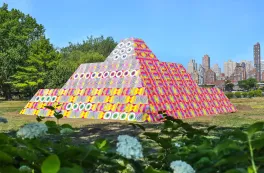
History of Art 5060 - Alternative Histories –Earthworks, Land Art, Land Back
Professor Aaron Katzeman
Class # 35741 | IN PERSON | WED & FRI 3:55-5:15
Earthen forms have been an essential part of artistic and architectural practices for thousands of years. Focusing on three distinct periods in North America—pre-contact earthworks, the Land Art movement of the 1960s and 1970s, and contemporary Indigenous artists advocating for “land back”—this course examines how Native and non-Native cultures have similarly engaged organic matter for differing environmental purposes. Before European colonization, Indigenous peoples constructed countless burial and effigy mounds throughout the eastern half of the continent, often as part of large cities and ceremonial complexes and sometimes aligned with seasonal or long-term celestial cycles. In the 1960s and 1970s, the Euro-American movement of Land Art emerged, whose emblematic site-specific sculptural installations in supposedly desolate landscapes of the American West were groundbreaking in their use of natural materials and monumental scale. However, Land Artists also appropriated much from earlier earthworks, and many scholars now suggest their actions closely mimicked the very processes of settler colonialism responsible for erasing mound building histories. In the last few decades, Indigenous artists have approached the subject of land quite differently than Land Artists, decidedly not utilizing it as a mere material resource for artistic production but, rather, as a means to ask larger questions about decolonization and land return. Through a transhistorical approach, this course will bring into conversation these three land-based practices, prompting a comparative analysis across time, space, and place. When applicable, content will focus on case studies in Ohio, especially the Newark Earthworks.
Image: Jeffrey Gibson, Because Once You Enter My House It Becomes Our House, 2020
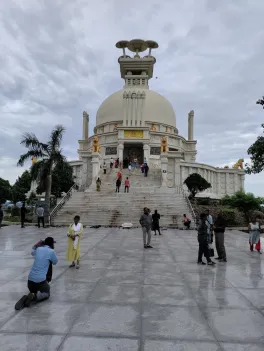
History of Art 5711 – Art of India I
Professor Ujaan Ghosh
Class #35600- UG, # 35601 -G | IN PERSON | TUE & THUR 12:45 - 2:05
Southern Asia is home to one of the world’s most diverse religious populations, including Islam, Buddhism, Hinduism, Jainism, and Christianity. It covers the present nation-states of India, Nepal, Pakistan, Bangladesh, and Sri Lanka. With an extraordinarily diverse population that speaks over 600 languages, South Asian religious customs, traditions, and practices represent an incredible assortment of plurality. This multiplicity is best reflected in the region’s art and architectural production of the region. In the course, students will be introduced to methodologies for critically evaluating religion as an object of academic study, as well as the ways it influenced artistic production, patronage, and reception. The course traces the relationship between religion and art across a broad historical span, from antiquity to the present, with a focus on major building programs, sculptures, painting traditions, performative
practices, and films. Students will learn to analyze the ways in which religious traditions, practices, and institutions have shaped visual and material culture over time in the region.
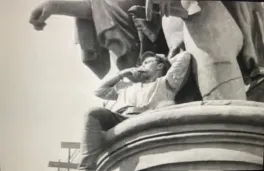
History of Art 5901- Silent Cinema
Class #35742-UG # 35739-G | IN PERSON | MON & WED 5:30-6:50
Instructor Mark Svede
HistArt5901 traces the evolution of silent film from proto-cinematic technologies and popular visual entertainments, through the invention of various motion picture devices by competing interests, on towards the standardization of early film language and conventions. At the same time, this course surveys the global proliferation of the medium, with its increasingly diverse styles, delineations of genre, exhibition practices, and ideological programs. We will look at canonical works as well as outlier examples and consider theoretical texts of the time that attempted to both make sense of this new art form and push it in even newer, more radical directions.
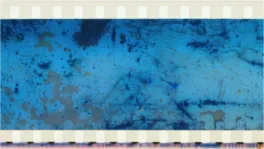
History of Art 5905 - Avant-Garde Cinema
Professor Erica Levin
Class # 29172 UG or #29171 G | IN PERSON | TUE & THUR 2:20-3:40
This course takes up films that have been defined as visionary, personal, experimental, political, or modernist; films often completed with limited financial resources and distributed through alternative, self-organized channels of exhibition. Looking closely at narratives of stylistic evolution in avant-garde cinema, we will focus on points of contact between the history of art and cinema in both its major and minor modes. At the same time, we will remain attentive to questions that this approach risks leaving unanswered. How, for example, has the history of inventive, non-commercial cinema been shaped in unexpected ways by geography, (sub)culture, and politics? What kinds of communities and institutions have formed to support precarious modes of filmmaking in different moments and places? Where do the histories of individual filmmakers intersect with the often-conflicted social worlds their films address? With these questions in mind, we will look closely at a wide range of films made to surprise, unnerve, and provoke viewers since the early 1920s.
Image: Tomonari Nishikawa, sound of a million insects, light of a thousand stars (2014)
6000-8000-Level Courses
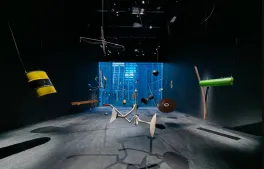
History of Art 7190- Curatorial Practicum
Professor Kris Paulsen
Class #34932 | IN PERSON | THURS: 2:15-6:20
This class introduces graduate students to the operations, practices, and missions of the various departments that comprise an art institution. We will learn how each relates to the final exhibition that a public encounters in the gallery. Though field trips, expert guest visits, and structured, scaffolded assignments toward a large final project, students will produce all the components of a museum exhibition and understand the role each department of the institution plays in producing and supporting exhibitions. The goal of this course is to not only train students to curate exhibitions, but to also understand and respect the labor and workflows of the institution as a whole. To be an effective curator, one must be aware of the production process beyond concept and artist selection, and the internal deadlines and protocols in place to make sure exhibitions open on time, on budget, and with the timely collaboration of colleagues. By the end of the semester, students will have drafted materials representing the outputs of each department of the museum, producing a complete dossier of an executable exhibition for one of our campus or local spaces. This practical knowledge will be paired with theoretical and critical writing about the ethics of exhibition making and philosophies of curating.
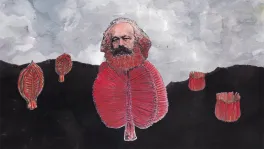
History of Art 8001- Studies in Art Theory and Criticism - Ecocritical Art History
Professor Aaron Katzeman
Class # 34930 | IN PERSON | MON 2:15 - 5:00
Since the turn of the 21st century, coinciding with worsening environmental conditions and increasingly severe climate crisis caused by colonialism and imperialism, an ecocritical turn has taken root within art history. As scholars of disparate periods, geographies, and media look anew at questions of materiality, representations of land and landscape, and artistic entanglements with the more-than-human world, there is an ongoing effort to identify ecocritical methods suitable for the discipline. In the last few decades, numerous articles, special issues, monographs, edited volumes, and exhibition catalogs have shaped a burgeoning field of study, offering varied entry points into thinking art and ecology. This graduate seminar surveys these diverse ecocritical approaches, while also examining intersections between visual culture and the environmental humanities more broadly. Course topics will consider how artists and art historians have critically engaged concepts such as “nature,” primitive accumulation, the Plantationocene, traditional ecological knowledge, agrarian reform, environmental justice, abolition ecology, waste, climate reparations, and ecocide, among others.
Image: Jonas Staal, 94 Million Years of Collectivism, Video Study, 2022
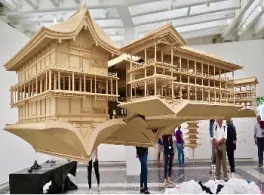
History of Art 8821 – Studies in Japanese Art: Global Art History and its Discontents
Professor Namiko Kunimoto
Class # 34928 | IN PERSON | TUE 2:15-5:00
What is the Global Turn and how has it reshaped art history? Why are universities and museums hiring Global Art Historians and how might they resolve the center-periphery model of scholarship? This seminar examines the possibilities and contradictions of Global Art History, asking not only how the field might expand geographically, but how its categories, methods, and structures of knowledge production might be transformed. We will consider writings by Atreyee Gupta, Partha Mitter, Rey Chow, Lisa Lowe, Steven Nelson, Okui Enwezor, Monica Juneja, and others. Particular attention will be given to debates around global, transnational, regional, and decolonial approaches, and to how these frameworks reshape the study of art in Japan, China, and beyond.