
Autumn 2026 Course Offerings
For the most accurate listings, including modes of instruction please visit BuckeyeLink or Classes.osu.edu.
Autumn 2026 Course Offerings
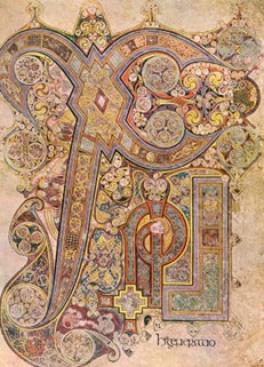
History of Art 2001 ONLINE - Western Art I: Ancient and Medieval Worlds
Course Designer - Professor Karl Whittington, Instructor - Professor Kristen Adams
Class # 24866 | ONLINE | Full Semester | ASYNCHRONOUS
Course Designer - Professor Karl Whittington, Instructor – TBD
Class #26385 | ONLINE | 7 Weeks, Session 2 | ASYCHRONOUS
This course examines the history of Western Art (architecture, painting and sculpture) from the third millennium BCE through the fifteenth century CE. Rather than a complete “survey” of that period, the course will concentrate its attention on a select group of representative monuments. We will examine not only the monuments themselves, but also the historical context in which they were produced in order to explore their purpose and the way that they functioned. There will be a strong emphasis on visual analysis and understanding how visual forms convey meaning and relate to the viewer. Our goal is to impart not only a body of knowledge but also a set of critical tools, which you should be able to apply to even material not specifically covered in this course.
GEN foundations: Literary, Visual and Performing arts (LVPA) and Historical and Cultural Studies
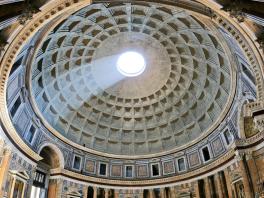
History of Art 2001 - Western Art I: Ancient and Medieval Worlds
Instructor – TBD
Class # 36219 | IN PERSON | MON & WED 5:30 - 6:50
This course examines the history of Western Art (architecture, painting and sculpture) from the third millennium BCE through the fifteenth century CE. Rather than a complete “survey” of that period, the course will concentrate its attention on a select group of representative monuments. We will examine not only the monuments themselves, but also the historical context in which they were produced in order to explore their purpose and the way that they functioned. There will be a strong emphasis on visual analysis and understanding how visual forms convey meaning and relate to the viewer. Our goal is to impart not only a body of knowledge but also a set of critical tools, which you should be able to apply to even material not specifically covered in this course.
GEN foundations: Literary, Visual and Performing arts (LVPA) and Historical and Cultural Studies
History of Art 2002 ONLINE - Western Art II: Europe and the United States, Renaissance to Modern
Professor Jody Patterson
Class # 37209 | HYBRID | ONLINE LECTURE + FRI IN PERSON RECITATION
This course examines the art of Europe and the United States from about 1400 to the present, with an emphasis on developments in painting. Rather than a traditional survey of that period, the course will concentrate on a select group of representative works that shaped—and were shaped by — Western social, political, economic, and intellectual history. There will be a strong emphasis, too, on questions of analysis and interpretation —including, in some cases, the changing history of the artworks’ reception. The goal will be to impart not only a body of knowledge but also a set of critical tools, including visual literacy, that students will be able to apply to a wide range of material not specifically covered in the course.
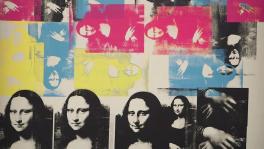
Image: Detail of Andy Warhol, Colored Mona Lisa, 1963.
GEN Foundations: Literary, Visual and Performing Arts (LVPA) and Historical and Cultural studies
History of Art 2002 HONORS - Western Art II: Europe and the United States, Renaissance to Modern
Instructor Hannah Slater
Class # 37035 | IN PERSON | MON & WED 9:35 - 10:55
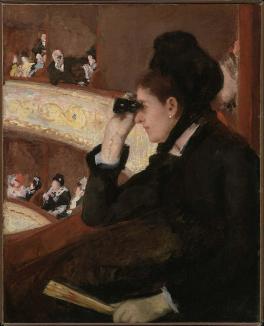
History of Art 2002 Honors examines the art of Europe and the United States from about 1400 to the middle of the 20th century. Rather than a complete “survey” of the art of that period, this course concentrates on a select group of representative works that shaped – and were shaped – by Western social, political, economic, and intellectual history. There is a strong emphasis, too, on questions of analysis and interpretation – including, in some cases, the changing history of the works’ reception over time. The goal of this course is to impart not only a body of knowledge but also a set of critical tools that you will be able to apply to a wide range of material not specifically covered in this course. Each class meeting will focus on a particular artist and/or culture that will be further explored through a discussion of primary and secondary textual sources, which are listed on the syllabus below and will be made available to you.
GEN foundations: Literary, Visual and Performing arts (LVPA) and Historical and Cultural Studies
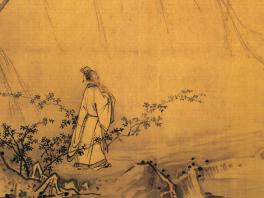
History of Art 2003 - The Art & Visual Culture of East Asia
Professor Christina Wei-Szu Burke Mathison
Class # 17606 | IN PERSON | LECTURE MON & WED 11:30 - 12:25 + FRI RECITATION
This course offers an introduction to the visual arts in East Asia, from the Neolithic through today. The course examines in particular the relationship between cultural production and changing notions of authority in East Asia in a comparative historical perspective. Case studies will be drawn from China, Taiwan, Tibet, Korea, and Japan. Issues examined include: religion and early state formation; courtly culture and monumentality; the development of urban popular culture; invasion and colonization; the age of empire; art and modernization.
GEN Foundations: Literary, Visual and Performing arts (LVPA) and Historical and Cultural Studies
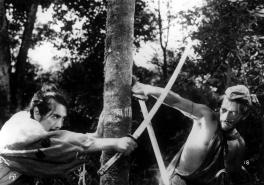
History of Art 2901 ONLINE - Introduction to World Cinema
Course Designer - Professor Kris Paulsen, Instructor – TBD
Class # 24842 | ONLINE | Full Semester | ASYNCHRONOUS
Course Designer - Professor Kris Paulsen, Instructor – TBD
Class # 27529 | ONLINE | 7 Weeks, Session 2 | ASYNCHRONOUS
This course will introduce students to the history of film as an artistic medium and a global art form. We will track technological, aesthetic, and formal developments in its evolution from photographic and proto-cinematic technologies to digital cinema by studying particular masterpieces, and focusing on the role of the director or auteur. We will pay close attention to the medium’s complex relationship to time, its changing materiality, and its fraught relationship to truth and reality. Students will engage in a historical and formal study of international cinema through a chronological survey of its major forms, techniques, and its relationship to the broader history of art, as well as social and political history. We will sample its major and “minor” forms, from Hollywood productions to art gallery experiments and cinema from the developing world. Students will be introduced to the grammar of film through a historical account of its formal evolution and the stylistic analysis of the visual and narrative structures of individual films.
GEN Foundations: Literary, Visual and Performing arts (LVPA)
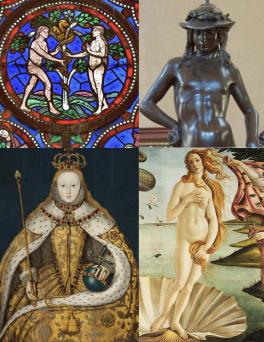
History of Art 3010 ONLINE - Gender and Sexuality in European Art
Course Designer - Professor Karl Whittington, Instructor – TBD
Class # 28031 | ONLINE | Full Semester | ASYNCHRONOUS
Course Designer - Professor Karl Whittington, Instructor – TBD
Class # 29318 | ONLINE | 7 Weeks, Session 2 | ASYNCHRONOUS
This course offers an introduction to the intersectional study of European Art, exploring the intertwining ideologies of gender, sexuality, race, and ethnicity from the Ancient Mediterranean World to the present. We will see that the ways artworks impact and construct ideas and stereotypes about gender, race, and sexuality in the modern world are deeply influenced by their development in premodern history. Topics to be explored include the ways in which ideas about gender roles and identities are shaped by artworks; the gendered contexts of artistic production; gendered practices of viewing works of art; the changing status of female and non-white artists and patrons in Europe; the way people of color were depicted in premodern European art; and queer and transgender artists and artworks. We will investigate the ways in which works of art enforced particular codes of behavior for people of different genders and races, but also how works of art served as sites of resistance to such roles and stereotypes, and as a place where individual identities were negotiated and portrayed. We will explore both famous works of European art and also lesser-known paintings, sculptures, buildings, and objects of visual culture.
GEN Foundations: Literary, Visual, and Performing Arts (LVPA) and Race, Ethnicity, and Gender Diversity (REGD)
History of Art 3020 - History of Textiles: Threads of Culture
Professor Kristen Adams
Class # 36417 | IN PERSON | MON & WED 2:20 - 3:40
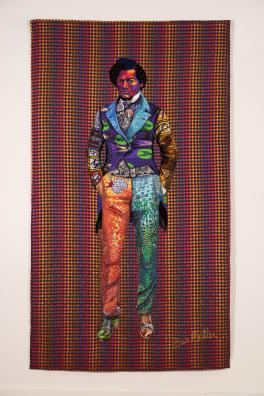
To tell the history of textiles is to tell the history of humankind and its cultures and traditions. Textiles through the ages have adorned bodies, decorated churches, propelled trade routes, driven language, and served as tactile forms of protest. By critically examining textiles rooted in cultural traditions from around the world, students will come to understand how textiles dating from pre-history to the present are artifacts deeply woven into the material culture of society. In addition to providing physical protection from the environments in which we live, textiles also serve as symbols of status and power, and their production and use have propelled systems that have had profound implications on humankind and its history. Our study begins with textiles produced from plant fibers - linen and cotton - and then shifts to textiles produced from animal fibers - wool and silk. We will examine technologies utilized across the Bronze Age, the Industrial Revolution, and the digital age to inform our understanding of textiles and their histories.
Image: Bisa Butler, The Storm, the Whirlwind, and the Earthquake, 2020, Toledo Museum of Art
GE Theme: Traditions, Cultures and Transformations

History of Art 3060 – Campus Collections
Instructor – TBD
Class # 28335 | IN PERSON | FRI 3:55 - 4:50
This 1 credit course will offer students the chance to engage with the diverse and extensive art collections found on the Ohio State University campus, including those of the Hale Black Cultural Center, the Wexner Center for the Arts, the Rare Books and Manuscripts Library, and the Museum of Classical Archaeology, among others. Classes will include theoretical discussions of collecting as a practice alongside practical conversations about how to access campus collections independently for use in future research. In addition to object-focused studies, students will have the chance to explore a wide range of career paths in arts curation and management through conversations with curators, librarians, and subject experts with specializations ranging from European medieval manuscripts to modern costumes and fashion.
History of Art 3521 - Renaissance Art in Italy
Professor Kristen Adams
Class # 25258 | IN PERSON | MON & WED 3:55 - 5:15
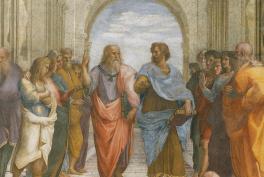
This course offers a panoramic introduction to the greatest artists and masterpieces of the Italian Renaissance from its beginnings in Florence through its triumph in Rome and Venice. After setting the stage with a brief overview of the art of the Late Gothic period in Italy, lectures will trace the revolutionary changes and global interests that transformed painting, sculpture, and the decorative arts in the 15th and 16th centuries. Special consideration will be given to the intersection of art and technology. Students will experience the Sistine Chapel and additional spaces in Virtual Reality and will examine how other modern technologies, when applied to Renaissance art, bring new insight to this remarkable period in history.
Image: Raphael, School of Athens (detail), 1509-1511, The Vatican
GEN Foundations: Literary, Visual, and Performing Arts (LVPA)
History of Art 3562 – Contemporary U.S. Latinx Art
Professor Carlos Rivas
Class # 35989 | IN PERSON | TUE & THUR 2:20 - 3:40
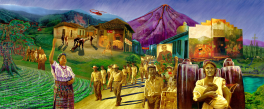
Survey of contemporary Latinx Art in the United States from its origins in the 1960s Civil Rights Movement through today. U.S. Latinx Art refers to the artistic, visual, and creative production emerging from Latinx communities in the context of diaspora after immigration from Latin America. This course will examine the visual arts created by communities with a multigenerational presence in this country, such as Mexican-Americans, Central Americans and Puerto Ricans, as well as newer arrivals. It treats works of art and activism across multiple media, from painting and sculpture to murals, photography, installation, experimental performance, posters, film, theatre, poetry, and artivism.
Image: Judy Baca, Migration of the Golden People, Mural, 2002. Central American Resource Center, Los Angeles, California.
GE Themes: Citizenship for a Diverse and Just World (CDJW) and Migration, Mobility and Immobility (MMI)
History of Art 3901 ONLINE - World Cinema Today
Course Designer - Professor Erica Levin, Instructor – TBD
Class # 26386 | ONLINE | ASYNCHRONOUS
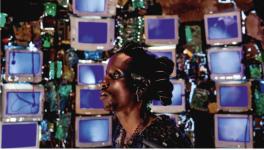
This course provides an introduction to World Cinema. It begins by examining how the aesthetics of realism, concerned above all with the texture and temporality of everyday life, have shaped developments in filmmaking in Europe, Latin American, and Asia. It also considers how recent global art cinema engages with the codes of genre and commercialism. How have familiar cinematic codes and conventions been reinvented to depict experiences shaped by transnationalism, colonialism, global finance, and migration? By placing films made across the globe into the broader historical and (multi-) cultural contexts of their production, this course examines how world cinema today not only engages life in the present but also calls up occluded fragments of the past.
GEN Foundations: Literary, Visual, and Performing Arts (LVPA)
History of Art 3901 - World Cinema Today
Instructor Mark Svede
Class # 35902 | IN PERSON | TUE & THUR 5:30 - 6:50
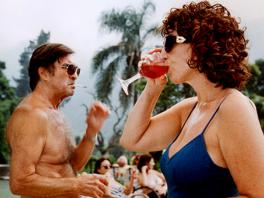
This course will survey the best of world cinema within the past decade or two, including representative examples of national cinemas, such as (potentially, since the selections would change) Iranian, Chinese, Taiwanese, and Indian; ethnic cinemas, such as (potentially) Kurdish, Jewish diaspora, and Quebecois; regional cinemas, such as (potentially) Eastern European and Middle Eastern cinemas; continental cinemas, such as African and South American; global cinema, such as Euro-American, Hong Kong, and Dogme 95; and the cinemas of civilizations, such as Islamic, Judeo-Christian, and Confucian. Not all these categories, or others that are possible, are represented in any given quarter.
GE Foundations: Literary, Visual, and Performing Arts (LVPA)
History of Art 3905 - The Developing World on Screen
Professors Erica Levin and Max Woodworth
Class # 36052 | IN PERSON | TUE & THUR 3:55 - 5:40
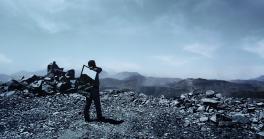
This is a co-taught intensive in-person course in Film Studies and Development Studies (4 credits) that explores relationships between the lived environments of the so-called “developing world” and their representations on film. In this course, which is designed to satisfy the requirements of the General Education “Lived Environments” theme, students will view narrative and documentary films from around the world and engage the stories they tell by way of readings on global poverty, inequality, environmental degradation, among other themes. This course engages a diverse range of approaches to studying the developing world, focusing on the production of knowledge and structures of perception that shape relations between social groups at different spatial scales and that have sustained a notion of the world as containing developed and developing regions.
Cross-listed in International Studies.
GE Theme: Lived Environments
History of Art 4001 – Writing Seminar in History of Art | Envisioning the Nation: Modern and Contemporary Art in Asia
Professor Namiko Kunimoto
Class # 24841 | IN PERSON | TUE & THUR 11:10 - 12:30
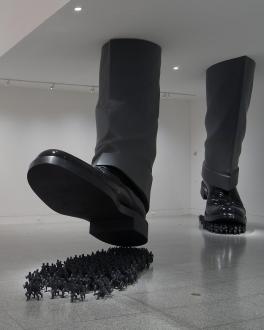
This course will teach art history majors how to write about art in a clear and compelling manner. Students will also improve their ability to critically engage with texts and do in-depth visual analysis. Through our readings, discussion, and careful looking at images, students will consider the ways the state has been represented, reacted against, and questioned in Asian and North American art. How did events such as the Pacific War impact the art world and how did representation in turn inform competing ideologies of nationhood and gender? How has globalization affected artistic practice? While addressing these issues we will examine various works of modern and contemporary art, including film, installation, photography, painting, and performance art.
History of Art 4005 - An Introduction to Artistic Media and Techniques
Professor Benjamin Jones
Class # 36057 | IN PERSON | WED & FRI 2:20 - 3:40
This course introduces students to the major media and techniques used by artists throughout history. We will examine in-depth the practical aspects of the production of sculptures, paintings, prints, mosaics, manuscripts, drawings, textiles, metalwork, and other media. This emphasis on technique will be balanced by discussions of the ways that a workʼs materiality shapes and activates its meaning. The course will seek to center global indigenous perspectives while acknowledging the pivotal role of the West in shaping evolving definitions of “art.”
Each class meeting will be structured around an assigned reading and the investigation of one or two case studies. We will usually begin by working through the technical aspects of a medium or technique (applying hands-on learning when possible). These will then be investigated through the assigned primary and secondary readings. We will investigate the strategies through which artists create and channel meaning through their chosen media and their use of particular techniques.
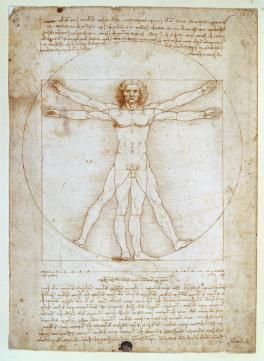
Image: Leonardo da Vinci, Vitruvian Man, pen and ink on paper, 1487
History of Art 4016 – Senior Research Seminar: Exhibiting and Collecting American Art
Professor Jody Patterson
Class # 24853 | IN PERSON | TUE & THUR 3:55 - 5:15
The senior research seminar is designed to augment the research and writing skills of History of Art majors. It will investigate aspects of the histories and theories of American Art within a framework sensitive to the varying aesthetic, political, and ideological agendas operating at key historical moments in the cultural formations of the United States. Close attention is given throughout the seminar to the role of institutions and patronage in the production and reception of artworks. The shifting status of American Art within international art-historical narratives will be examined, as will issues around gender, race, and identity.
Initial meetings of the senior research seminar will be focused on the historiography of American Art, in addition to discussions around research methods in preparation for conducting field work. This seminar will include a field trip to New York City over Fall Break (October 15-17, 2026) that will enable students to view artworks first-hand. This optional (but highly encouraged) part of the class will be fully funded for all enrolled students. Students will be able to visit relevant museums and collections with the course instructor, conduct their own research, and meet with History of Art alumni working in the arts in the city. The final sessions will be devoted to individual student presentations which will then form the foundation for a research paper due at the end of the semester.
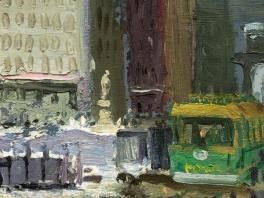
Image: Detail, George Bellows, New York, 1911

History of Art 4020 – Special Topics in Architecture: A Social History of Global Architecture
Professor Ujaan Ghosh
Class # 35906 | IN PERSON | MON & WED 5:30 – 6:50
PLEASE NOTE:
This is a new course pending curricular approval and is not currently visible in the OSU Class Schedule.
In this course, we will explore twenty iconic buildings from around the world and across history, using them as windows into comprehending global architectural traditions. Rather than attempting a comprehensive survey, we focus on select case studies to introduce key building practices, historical contexts, and design philosophies. Moving beyond purely formal and stylistic analysis, the course examines how built space is shaped by the social, economic, and religious lives that unfold within it. Special attention will be given to the affective power of space, its uses, and even its abuses, inviting students to think critically about how architecture impacts, shapes, and in turn is shaped by human experience.
Image: Nadiimjr, Wikimedia Commons. CC by SA 4.0
History of Art 4030 – Museum Studies Seminar: Towards an Ethico-Aesthetical Curatorial Practice
Instructor Amy Schuessler
Class # 35906 | IN PERSON | TUE & THUR 5:30 - 6:50
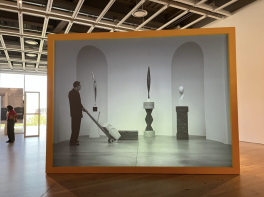
This will be a hands-on exploration of museum exhibitions and how they shape knowledge in the field. In this course, we will explore, interpret, and evaluate museum, gallery, and curatorial practices as they relate to ethics and aesthetics in contemporary spaces. We will examine the responsibility of art and our responsibility within the art institution when curating art objects, taking into account how they coalesce to determine an aesthetical, conceptual, or theoretical project. Looking at specific exhibitions, pertinent curatorial essays, and relevant texts that determine an ever evolving platform, we will seek to decode long standing hegemonic museum methodologies as we delve into ways to think otherwise. How can we create an ethos of care out of an ethos of aesthetics? Throughout the course, we will ask deep questions about the role of the museum, gallery, and art institution as they evolve, devolve, or remain stagnant. Ultimately, by engaging in various projects, we will identify moments in which ethics and aesthetics converge in the domain of curated art spaces.
History of Art 4040 – Topics in Indigenous Art History: Modern and Contemporary Art of Native North America
Professor Aaron Katzeman
Class # 36058 | IN PERSON | MON & WED 3:55 - 5:15
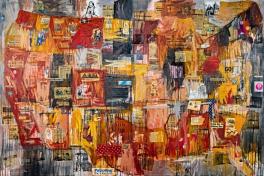
This course examines the art of Native North America (with a particular focus on the so-called United States) during the 20th and 21st centuries. From challenging the founding myths of Euro-American modernism, to the birth of Red Power, the establishment of the National Museum of the American Indian, and contentious inclusion within the global contemporary art world, Indigenous artists have long affirmed their traditions of visual culture while navigating the politics of settler colonial institutions. Analyzing major exhibitions, publications, and social movements, students will be introduced to many of the most important modern and contemporary Indigenous artists, photographers, filmmakers, curators, theorists, and activists in North America, whose work will be situated within a broader art historical framework. Although generally organized in a chronological fashion, major thematic questions addressing concerns of representation, recognition, and decolonization, among others, will recur throughout the course.
Image: Jaune Quick-to-See Smith, I See Red: Indian Map, 1992
History of Art 4212 – Egyptian Art and Archeology
Instructor Sarah Schellinger
Class # 36082 | IN PERSON | MON & WED 12:45 - 2:05
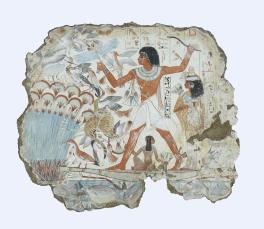
Egyptian art is some of the most iconic from the ancient world. The aim of this course is to provide an overview of the major sites, monuments, and objects throughout ancient Egyptian history, from the Predynastic through the Graeco-Roman periods, that shaped the way the Egyptians visualized their world. At the end of the semester, we will also examine the legacy of Egyptian-style art over the centuries.
History of Art 4810 - The Arts of China
Professor Christina Wei-Szu Burke Mathison
Class # 36083 | IN PERSON | TUE & THUR 9:35 - 10:55
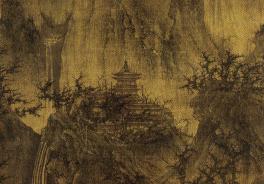
The distinct and influential visual culture of China reflects the dynamic periods in China’s history. This course examines the art and history of China thematically and chronologically exploring the culture’s artistic practice in religious, ritual, political, and courtly contexts. Beginning with early pottery-making and jade-carving cultures and proceeding into the twenty-first century, students will analyze the main artistic trends over time and wrestle with the related issues of power, authenticity, and politics.
GE Foundations: Literary, Visual, and Performing Arts (LVPA)
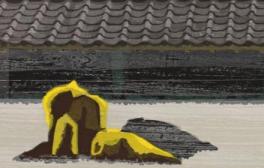
History of Art 4825 – Arts of Japan: From Modernism to Manga
Instructor Hannah Slater
Class # 36085 | IN PERSON | MON & WED 9:35 - 10:55
In this course, students will explore the arts of Japan from 1868 to the present, covering a wide range of materials and formats, including sculpture, painting, ceramics, prints, photography, performance art, and manga. We will discuss historical and social contexts of the period, such as the American Occupation, Japan’s Cold War era, the burst of the economic bubble in the 1990s, and art made in response to the 2011 Fukushima nuclear disaster. We will also address issues such as gender, imperialism, craft, representations of the body, censorship, the cult of cuteness, and the dynamics of nationalism since 1945. The class will follow a rough chronological order while allowing the linkages between past and present to be examined, rather than obscured. No past experience in Japanese studies, Japanese language, or art history required.
GEN Foundations: Literary, Visual, and Performing Arts (LVPA)
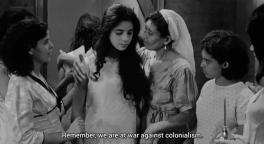
History of Art 5002 – Special Topics: Third and Fourth Cinemas
Professor Aaron Katzeman
Class # 36094-UG or 36095-G | IN PERSON | TUE & THUR 12:45-2:05
Film has repeatedly been weaponized in the struggle against varying forms of colonial domination. Spurred by the emergent era of decolonization, filmmakers in the 1960s began theorizing and experimenting with a new form of militant cinema, utilizing the medium to develop and foment revolutionary anticolonial consciousness. More recently, Indigenous filmmakers and activists have turned to the medium to trouble long-held stereotypical colonial representations, while also using film to document ongoing struggles for political, economic, and cultural sovereignty. Drawing connections between post-World War II movements for self-determination and more recent calls for decolonization, this course examines the aesthetic and political similarities and differences between Third Cinema—derived from anticolonial national liberation struggles in the Third World—and Fourth Cinema, or films produced by and about Indigenous peoples. Course readings include prominent manifestos from filmmakers, texts by the political theorists and revolutionary figures who inspired them, and scholarly film analysis. Screenings and in-class clips will cover colonial contexts in Algeria, Angola, Argentina, Australia, Bolivia, Brazil, Canada, Chile, Cuba, Hawai‘i, Ireland, Mozambique, Nicaragua, Oman, Palestine, Philippines, United States, Uruguay, and Venezuela, among others.
Image: Still from The Battle of Algiers, directed by Gillo Pontecorvo, 1966
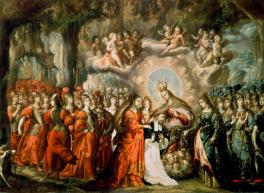
History of Art 5562 - Art and History in Early Modern Latin America, 1492-1820
Professor Carlos Rivas
Class # 36096-UG or 36097-G | IN PERSON | WED & FRI 9:35 - 10:55
How did three centuries of European colonialism shape visual and material culture in Latin America, and how is this period still relevant today? This course explores the art and architecture of early modern Latin America (1492-1820) through in-depth examination of a wide range of art historical subjects — from urban planning to featherworks to biombos and to paintings on canvas — interpreted from a range of disciplinary (art history, anthropology, ethnic studies) and theoretical perspectives (critical race theory, decolonial methodologies, and critical indigeneity).
Image: Cristóbal de Villalpando, Lactación de Santo Domingo. Oil on canvas, 1680s. Church of Santo Domingo, Mexico City.
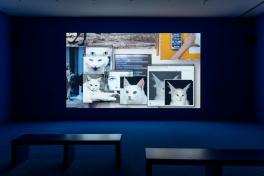
History of Art 5645 – Video Art
Professor Kris Paulsen
Class # 36098-UG or 36099-G | IN PERSON | TUE & THUR 9:35 - 10:55
This course will survey the history of Video Art from 1965 to the present, paying special attention to the cultural and political forces that shaped its form and content. We will trace Video Art’s roots back to Pop, Minimalism and Conceptual Art, and examine its early identities as “sculpture” or “performance document.” We will pay special attention to video’s relationship to its “parent” media – television – and study how artists used television broadcasts to distribute their work and to subvert the power of the mass media. The course will end with a series of case studies on contemporary artists and special events at the Wexner Center for the Arts. Students will learn to analyze video art by engaging with its specific formal and temporal structures, its relationship to social history and politics, as well as its “cinematic” properties, such as narrative, shot and editing.
Image: Camille Henrot, Grosse Fatigue (2013).

History of Art 5910 – Documentary Cinema
Professor Erica Levin
Class # 28340-UG or 28339-G | IN PERSON | WED & FRI 3:55 - 5:15
The artist Hito Steyerl observes, “The documentary form as such is now more potent than ever, even though we believe less than ever in documentary truth claims.” This course explores the paradox she identifies by looking closely at the history of documentary cinema, from the first film named to the genre – Nanook of the North – to the present day, as it shapes a wide range of moving image practices. The class follows an historical trajectory, but will encourage you to think comparatively and analytically about documentary form, ethics, and aesthetics. We will examine the major modes of documentary filmmaking including cinema verité, direct cinema, investigative documentary, ethnographic film, agit-prop, activist media, autobiography and the personal essay. Through formal analysis, we will ask how these different documentary modes generate or exploit a variety of “reality effects.” Along the way, we will consider why the promise of documentary truth is always beset by uncertainty, or as Steyerl describes it, “a shadow” of insecurity. Rather than accept this phenomenon as a constraint or a limit, we will explore how experimental filmmakers and artists like Steyerl help us to see the value and meaning of the “perpetual doubt” documentary inspires.
Image: The Prison in Twelve Landscapes (Brett Story, 2016)
History of Art 6001 – The Historical and Conceptual Bases of Art History
Professor Lisa Florman
Class # 35903 | IN PERSON | TUE 2:15 - 5:00
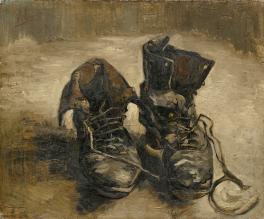
The goal of this course is to offer a grounding in the history of the discipline of art history, so as to enable you to better understand the current state of the field and to assess the claims of contemporary art history and theory. It is not a methods course, insofar as a “method” is typically understood as a systematic procedure that, once mastered, can be applied to a wide range of objects more or less indiscriminately. The majority of the texts we’ll be examining assume, on the contrary, that the art work itself largely determines—or ought to determine—the sorts of approaches taken to it. Typically, too, a “method” assumes the uncontested availability of the object of study, whereas this course aims to put some pressure on precisely that idea (i.e.: What is a work of art and how do we recognize it? How does it differ—if indeed it does—from other sorts of human-made objects? What sort of access do we have to it? etc.)
Image: Vincent Van Gogh, A Pair of Shoes (1886), Van Gogh Museum, Amsterdam
History of Art 7020 – Curatorial Elective: Scandal! Controversy and Censorship in 20C Curatorial Practice
Professor Sam Aranke
Class # 35904 | IN PERSON | WED 2:15 - 5:00
In a joint statement entitled “Modern Art” written in 1950, the leadership of the Institute for Contemporary Art Boston, The Museum of Modern Art, and the Whitney Museum of American Art formed an unusual alliance in an effort to combat censorship in the arts: "Believing strongly in the quality and vitality of American art, we oppose its definition in narrow nationalistic terms. We hold that American art which is international in character is as valid as art obviously American in subject matter. We deplore the revival of the tendency to identify American art exclusively with popular realism, regional subject and nationalistic sentiment.” These words, written over seventy years ago, feel as if they could have been penned today. While we hear from politicians and institutions, artists and audiences, academics and activists, there is little to nothing from and about curators during this era. Where are those cultural workers who conceptualized, organized, and mounted these shows? Where are the voices and insights of those who developed these exhibitions? This course will focus on select case studies that dig into exhibitions that gave rise to controversy from the 1930s on. We will specifically think through how curatorial practice— as a public service— becomes a container for national debates. Students will engage in primary archival research, and work collectively to pitch an exhibition that thinks through major and minor themes in the course.
Image: The Censorship Horizon: A Survey of Art Museum Directors, Pen America, January 14, 2025.
History of Art 8631 – Studies in American Art - Teaching Modernity and Modernism
Professor Benjamin Jones
Class # 36917 | IN PERSON | THUR 2:15 - 5:00
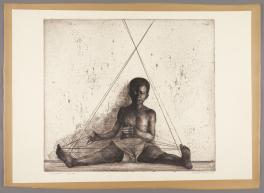
This course is designed to prepare students to teach through the contours of “modernity and modernism,” among the most contested terrains of art-historical discourse. For some, the terms simply denote Western art of the last two hundred-odd years. For others, modernism refers to forms of “progress” and “advanced” visual art. For still others, the modernism singles out modes of artistic opposition to the structures of modernity: patriarchy, capitalism, colonialism, industrialization, war, and technofeudalism, that continue to define our world. Over the course of the semester, we will keep these competing definitions in play as we examine signal episodes of European and U.S. modernism from the mid-nineteenth through today, as well as their counterparts in Brazil, China, Haiti, India, Japan, Mexico, and Nigeria. At the same time, we will engage the work of thinkers from Marx to Hartman whose writing has come to define the modern era and our approaches to its understanding within humanistic discourse. With an emphasis on the pedagogy of all of the above, this course examines a history of ideas, (art) objects, and events that have shaped the “modern.”
Image: Charles White, Cat’s Cradle, etching on tan wove paper, 23 3/4x26,” 1972